UNITEE Roundtable: “Building bridges: the role of New European entrepreneurs in the European Neighborhood Policy”

On Wednesday 27th September, UNITEE – The New European Business Confederation hosted the high-level roundtable Building bridges: the role of New European Entrepreneurs in the European Neighborhood policy. The roundtable was organised as part of the constant work of UNITEE to contribute to establish a positive narrative of migration. In this regard the topic chosen, at the crossroads between economy, migration and development, is of a particular interest in the framework of the currently discussed European Economic Diplomacy Strategy, together with its wider efforts to stabilize its neighborhood.

The event, set in the intimate setting of UNITEE’s office in Place du Luxembourg 2, 1050 Ixelles, took place from 12.30 to 14.30. It was an opportunity for policy makers, practitioners and experts to debate on the important role migrant entrepreneurs can have in contributing to the political strategies of the EU in the relations with its neighborhood, if given the chance. The speakers were called to reflect on questions such as: Is there really a positive effect of New European entrepreneurs on their country of origin? How could the European Neighbourhood Policy take advantage from the engagement of New European entrepreneurs in order to pursue its long-term objectives of stabilisation and economic growth?

The roundtable started with an opening remark by MEP Brando Benifei, from the S&D group. Mr Benifei drew on his experience as Rapporteur for the labour market integration of refugees to remark the important contributions New European entrepreneurs give to the European economy and society; he pointed out that in some countries, such as his native Italy, from 2011 to 2015 migrants have been disproportionately creating jobs and companies. For this reason, Mr Benifei argued that this contribution needs to be acknowledged and fostered by national and European institutions: he called for unnecessary burdens to be scrapped, together with suggesting the possibility of using the Blue Card directive to help entrepreneurs from abroad to launch their business in the EU.

After Mr Benifei’s introduction, the roundtable started with an intervention by Christophe Yvetot, the Director of UNIDO‘s Brussels Office. Mr Yvetot presented the role of his organisation in focussing on industrial development, with the objective of bringing about sustainable development, circular economy, and renewable energies in developing countries. He pointed out that the strategy behind these actions is connected to migration, since it aims to stabilise people in their countries of origin: indeed, data showed that industrial development had an unparalleled role in reducing poverty. In this, he mde a specific reference to the European Neighborhood Policy (ENP), showing how UNIDO is collaborating with the EU to develop the Euro-Med industrial cooperation. Finally, he explained the two parts of UNIDO’s approach to migration: first, to provide opportunities; and secondly, to bring about circular migration.

After Mr Yvetot, it was the turn of Geertrui Lanneau, Senior Senior Regional Specialist on Labour Mobility and Human Development for the IOM Regional Office for the EU to present her remarks. Ms Lanneau began her remarks by noting the great entrepreneurial drive of migrants: 25% of all entrepreneurs in the UK, for instance, have a migrant background. This is part of a wider set of contributions diasporas have, both in Europe and in their countries of origin: first of all, they bring development and wealth to their countries of origin, through remittances. Secondly, they also contribute socially: in Europe, they create jobs; in their countries of origin, they bring skills and know-how. Nevertheless, Mrs Lanneau noted that this second contribution is somewhat limited by the fact that even many New European entrepreneurs find it hard to invest into their countries of origin, due to corruption and red tape. Finally, she mentioned the relevant role female entrepreneurship can play, and the need to support it through projects such as IOM’s MIDA program.

The next speaker was Giacomo Mattinò, Head of Unit Enterprise Network and Internationalisation of SMEs, DG GROW, at the European Commission. Mr Mattinò focussed his intervention on the tools DG GROW provides for the internationalisation of SMEs and, in general, to create an environment conducive to entrepreneurship in the EU. In general, the European Commission does not distinguish among entrepreneurs: all can apply. First of all, he referred to the Enterprise Europe Network, that aims at supporting SMEs in their ventures abroad: this is made even more necessary by the fact that 90% of European SMEs export beyond their borders.  Another tool to foster entrepreneurship is the Erasmus for Young Entrepreneurs, that provides the possibility for aspiring entrepreneurs to spend some time abroad in order to learn a business.

Finally, the roundtable was closed by Adem Kumcu, President of UNITEE. In his remarks, Mr Kumcu drew on his personal experience to provide an overview of the activities, and challenges, of organising migrant entrepreneurs and advocating for them at the European level.  He noted that the correct engagement of migrant entrepreneurs is strategic for the EU: only by easily integrating and making the best use out of the diversity of New Europeans, will Europe be able to meet today’s challenges, ranging from an aging society to an increasingly competitive economy. Dr Kumcu also presented some initiatives undertaken in the past by UNITEE with the aim of favouring this engagement, such as its cooperation with the Union pour la Méditerranée and its partnership with UEAPME.

In general, the event showed the many different aspects in which New European entrepreneurs have an important, and currently undervalued, role to play in the relationship of the EU with its wider neighborhood. In the current situation where a successful and long-term integration strategy is more and more important, acknowledging the opportunities migrant entrepreneurs hold is a first step for a more sustainable future for Europe.


Programme of the event

When: 12.30 – 14.30

Where: Place du Luxembourg 2, 1050 Ixelles

12.30-12:50: Welcoming of participants and light lunch

12:50-13:00: Opening Remarks by Brando Benifei MEP (S&D, Italy)

13:00-14:10: Roundtable with the following speakers:

  • Christophe Yvetot, Head of UNIDO’s Office to the European Union
  • Giacomo Mattinò, Head of Unit Enterprise Network and Internationalisation of SMEs, DG GROW, European Commission
  • Geertrui Lanneau, Senior Regional Specialist on Labour Mobility and Human Development for the IOM Regional Office for the EU, Norway and Switzerland.
  • Dr. Adem Kumcu, President of UNITEE

Moderated by Giovanni Collot, Editor of The New European magazine

14:10-14:30: Q&A with the audience


More information on the roundtable can be found on Twitter, under #buildingbridges.

Workshop on migrant entrepreneurship at EESC

The workshop happened in occasion of the launch of the 2016 Report on Immigration and Entrepreneurship, published by CNA and IDOS Research and Study Center with the support of Moneygram. The report, analysing in depth the determining factors  immigrant entrepreneurship in Italy and in the European context, is one of the first pieces of research of its kind. It shows a clear trend towards the growth of migrant-owned enterprises in Italy: not only 10% of all enterprises are migrant owned, but they have grown by 21% between 2011 and 2015, while the total number of companies has decreased by 0.9% in the same amount of time. On the other hand, migrant-owned enterprises still suffer from some specific challenges, ranging from their small size to their short lifetime spans, when compared to native-owned companies.

These issues and many more were discussed at the roundtable, which saw the participation of a series of NGOs, policy makers and institutions actively working on the field of migrant entrepreneurship. The event was an occasion for the exchange of best practices and the comparison between different realities in the EU, ranging from the local level, represented by some representatives of cities and regions, to the European Commission’s DG HOME.

The list of speakers at the event included:

  • Gkofas Panagiotis, EESC SMEs and Craft Category, President European SMEs Academy Avignon
  • George Dassis, President of EESC
  • Giuseppe Oliviero, Vice President CNA
  • Ugo Melchionda, IDOS Research Centre
  • Laura Corrado, Head of Unit B1 for Legal Migration and Integration- DG HOME, Cabinet, European Commission
  • Arnold De Boer, UEAPME

For more information, it is possible to find a summary of the report here.


How to encourage immigrant entrepreneurship?

“The sense of creativity and initiative that migrants can bring must be unleashed to its full potential”
Mr. Avramopoulos

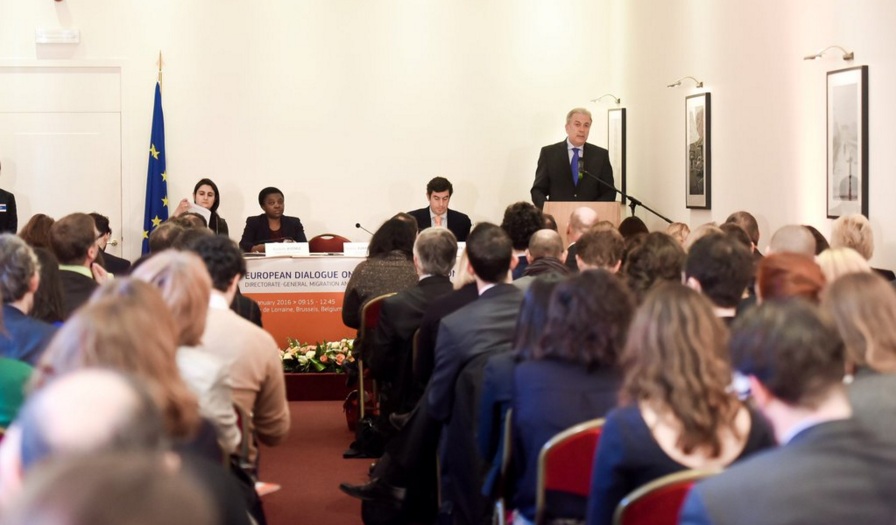
UNITEE was invited to European Dialogue on Skills and Migration on 27 January 2016, which was initiated by European Commissioner for Migration, Home Affairs and Citizenship.

The main topics of the dialogue were how to turn migration into an opportunity for the EU, how to ensure effective integration of migrants, and how to attract skilled workers from third countries. One significant aspect of the discussion was promoting entrepreneurship among migrants and attracting innovative talents from abroad. Dr. Kumcu, UNITEE’s President presented UNITEE’s propositions to stimulate immigrant entrepreneurship. The main propositions included the importance of having diversified background of people in European institutions, as well as more females, leading to greater gender equality.

Mr. Avramopoulos said he would like to take the opportunity to call on businesses, companies and employers to step up, and join forces with national and local governments, with civil society, and schools to turn the challenges of the refugee crisis into opportunities. He said, successful integration of those who have the right to stay is important for the overall prosperity of our societies. An important aspect is to make sure that those who have recently arrived can find a place in the labour market, which is crucial for the receiving societies. He also mentioned that Europe is an aging continent and its working age population is declining steadily, without migration the EU population would decline by 18 million in the next decade already.

Consequently, Mr. Avramopoulos says, there are two things that need to be kept in mind; the improvement of skills of people already in the EU (both EU and non-EU citizens), and the need of effective migration policies to attract the skills that are lacking in Europe.  In addition, the Commission is analysing how innovative entrepreneurs who are willing to move to Europe, could be granted assistance and possibly a residence and work permit.

Some of the attendees of the event included:

  • Ulrike Rabmer Koller, President- UEAPME
  • Arnaldo Abruzzini, Secretary General- Euro Chambers
  • Maxime Ceruttim, Director for Social Affairs- Business Europe
  • Raimund Beckerm, Member of the Executive Board- BAMF (Federal Office for Asylum and Migration)
  • Demetrios G. Papademetriou, President- The Migration Policy Institute Europe (MPI Europe)avzvvv

Business Beyond Borders

“Being open-minded, open to ideas and diversity is our key to success.”
Ali Ülker, President of Ülker Group

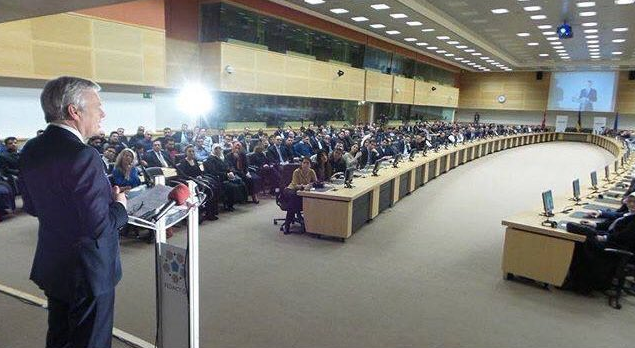
UNITEE, the New European Business Confederation, organized an event in cooperation with BETIAD, the Belgian Federation of Active Entrepreneurs, called Business Beyond Borders on January 18, 2016. The event took place in Brussels, at the Egmont Palace.

The topic discussed was about trade, with the focus on sharing best practices on international trade and investment.

The conference welcomed more than 400 entrepreneurs from Belgium, where two global family business entrepreneurs shared their experiences. Ali Ülker, the President of Ülker Group, presented the activities of Ülker qnd Godiva. The second entrepreneur was Bart Lambrechts, the director of exports at Soudal, a Belgian company. He presented the evolution of the company, and how it expanded its operations in 44 countries. Moreover, Lambrechts also shared his experiences in doing business internationally.

Didier Reynders concluded by saying, Belgium is an important business partner, and is also interesting for investments.

The panel included:

  • Kumcu, The president of UNITEE
  • Didier Reynder, Belgian Minister of Foreign Affairs
  • Ali Ülker, President of Ülker Group
  • Bart Lambrechts, CEO of Soudal
    hdeee

Unification and integration of Turkish and Greek parts of Cyprus

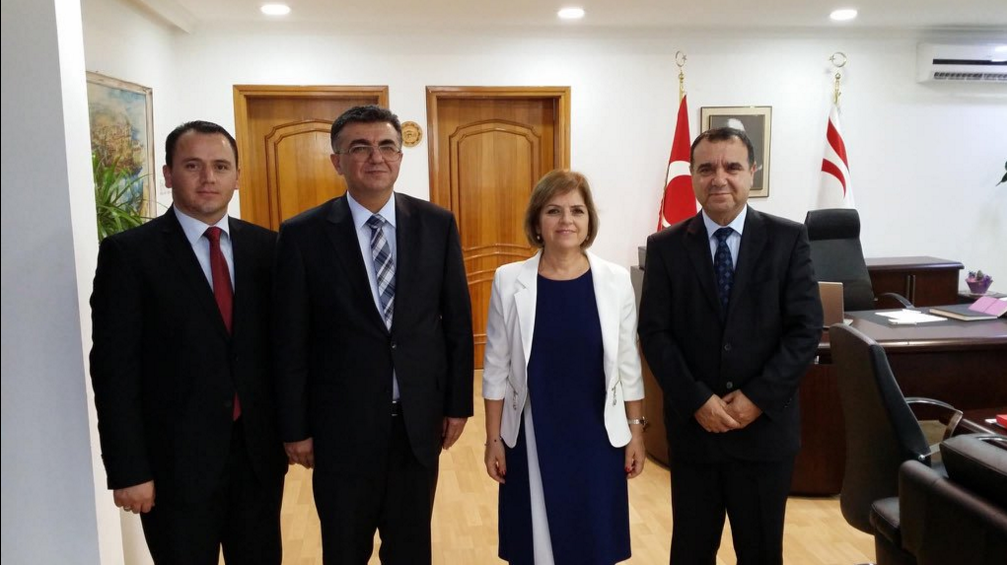
The president of UNITEE, Dr. Kumcu, was invited to a conference organized by Cyprus Turkish Business Council, in cooperation with Turkish Cyprus Chambers of commerce (KTTO). The main focus of the conference on 22nd October 2015 was on Cyprus-EU relations and discussions on the unification of the Turkish and Greek parts.

The focus of the event was on the benefits of the unification while also acknowledging the barriers, and how to overcome them. Dr. Kumcu was invited to Cyprus particularly to inform members of Chamber of Commerce of Nicosia (Lefkoşa), as well as, members of KTIAK about Cyprus-EU relations, and uniting through entrepreneurship. For that reason, the main message delivered on this occasion was that reconciliation could be achieved by uniting business communities in creating bridges between the two parts. Also, the Northern Cyprus businesses could be encouraged to extend their activities to Europe where the state itself is not recognised.

Being the key speaker, UNITEE’s President, noted that the respective actions to take here are to prepare Northern Cyprus to do business in Europe, and to integrate Northern Cyprus business associations.  Vice President of Northern Cyprus, elaborated on negotiation with Southern Cyprus, and for the first time since many years, he expressed his optimism that these parties are able to find common grounds and a foundation for mutual understanding. Although, there certainly are a lot of challenges and barriers to overcome. Dr. Kumcu expressed UNITEE’s readiness to contribute to responding to those challenges by giving support, in order to help both the Turkish and Greek enterprises of Cyprus to find business opportunities and partners in the EU.

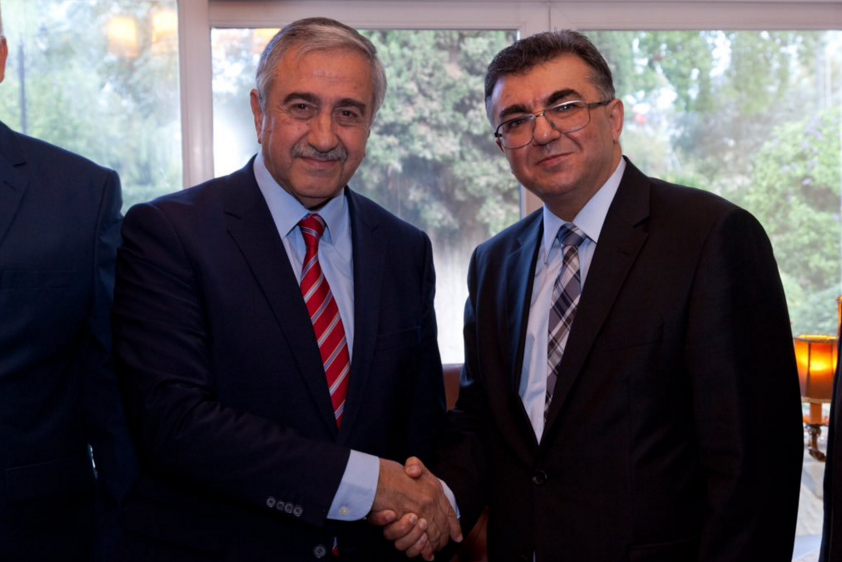
The following day, Dr. Kumcu was invited to meet Mrs Emine Çolak, Minister of Foreign affairs of Northern Cyprus, as well as, Mr Mustafa Akıncı, President of Northern Cyprus. During both meetings, discussions took place on what can be the roles of business or member organisations in building peace through commerce. Following these events, he attended a national, and two private televisions’ programs, expressing the importance of contributing to peace through economic activities, to Northern Cyprus citizens.cysrcyr

Modern Pioneers: The Economic Impact of New Europeans

Thanks to their multiple backgrounds, New Europeans have important assets to offer to Europe in an increasingly complex and competitive economic environment. Not only are they job creators, but thanks to their dual cultural background and their entrepreneurial spirit, they are also key players in the development of innovative products and services and in the internationalisation of European SMEs. They also contribute to the rejuvenation of European society, and contribute to the flow of goods, people and information across borders. Understanding this contribution to the European Union’s society and economy was at the core of the New European Forums.

UNITEE organized the New European Forums. Two conferences that were held under the Patronage of and inside the European parliament in Brussels, on June 4th 2015, with the aim of enlightening the added value migrants bring to the European Union. During the second conference, entitled “Modern Pioneers: The Economic Impact of New Europeans”, panellists and participants discussed a wide range of topics such as how to overcome the aging phenomenon, the changing structure of the European economy, the challenge of attracting all kinds of people, and why the EU turns out to be an administrative obstacle to mobility.

The panel was composed of:

Fredrik Erixon, Director of European Centre for International Political Economy (ECIPE)
Christof-Sebastian Klitz, Head of the Volkswagen Group EU Representation in Brussels
Belinda Pyke (keynote speaker), Director for Migration and Mobility at DG HOME
Madi Sharma, Member of European Economic and Social Committee (EESC)

The conference was opened by a speech from Adem Kumcu, President of UNITTE, who also moderated the debates.

Overcoming the aging phenomenon

Belinda Pyke started her keynote speech by stating that the demography of Europe is changing due to aging population. Due to this phenomenon, the Union will soon face an important lack of workers. Madi Sharma, strongly enjoined young people to act now: “The European Union was founded on words. You have only one mouth. But you have two hands. So, actions, not words!” Fredrik Erixon stressed that the first issue that must be taken into account is demography: due to the aging phenomenon, we must rely on migration to provide Europe with young workers.

The changing structure of the European economy

Belinda Pyke also stressed that the economy is changing in its structure. Some sectors will soon be in an urgent need of more workers that migration can provide. Fredrik Erixon backed that statement, saying that our exchanges with developing countries are increasing, and service production is taking over industrial production.

Attracting all kinds of people

As a continuation, Belinda Pyke insisted on the fact that the Union has to attract more people, especially students. In addition to students, the Commission created the European Union Blue Card Directive to attract more highly skilled workers. Christof-Sebastian Klitz added that Europe does not need only educated people, but people with a width range of skills. Fredrik Erixon advocated the creation of hubs in the EU, in order to raise productivity and salaries and become more attractive. This strategy implies that workers have to be able to move easily and freely across borders.

The EU as an administrative obstacle to mobility

Madi Sharma, insisted on the fact that the EU administration system makes it very complicated for people to launch their own business,: “Administrative steps are a nightmare”. Christof-Sebastian Klitz exposed how Volkswagen notably launches vocational training programs across borders, in Spain, Portugal, and Italy. He also stressed that mobility is still very complicated for workers because of various administrative barriers. Fredrik Erixon also said that the characteristics of the political map have an influence on the attractive power of a region. On this subject, Belinda Pyke said that the European Commission adopted the European Agenda of Migration to organising both illegal and legal immigration in the Union Member States. The European Commission is also in the process of setting EU legislation against all discriminations on the labour market.

Adem Kumcu closed the debates by declaring that “there is no doubt about the added-value of New Europeans. But there are still a lot of challenges to tackle.”

Read the full report here.
View the picture gallery here.