
The RIDE Project’s Final Event Took Place on 20 January

After running for two years, the RIDE project (Reach Inclusion Through Digital Empowerment For Migrant Women) concluded this month, with a closing event held in Brussels on 20 January 2023. Co-funded by the EU’s Asylum, Migration and Integration Fund (AMIF), the project aimed at advancing the inclusion of migrant and refugee women in the digital labour market by organising training, mentoring and job fairs in six EU countries. Project partners, trainees of the programme and policy-makers gathered for the event to discuss the outcomes, key takeaways, and future policy directions concerning the inclusion of migrant and refugee women in the digital labour market.

The RIDE project in numbers:

  • 400 hours of mentoring and coaching per country
  • 60 participants taking part in training by Cisco or The Code to Change
  • 6 Job Placement Fairs
  • 200+ migrant women attending Job Placement Fairs
  • 40+ companies attending Job Placement Fairs

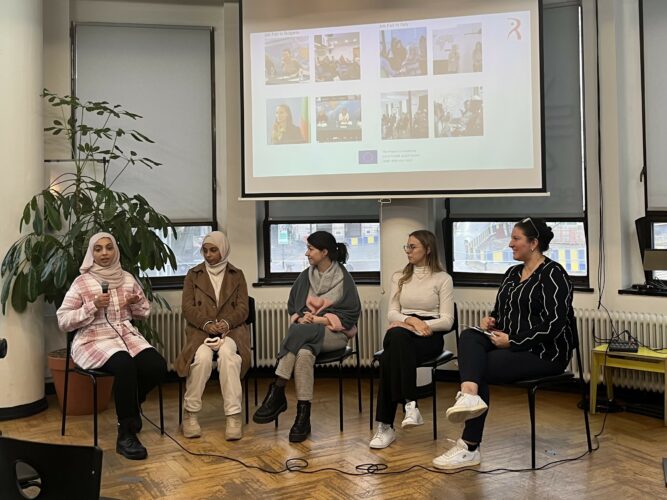
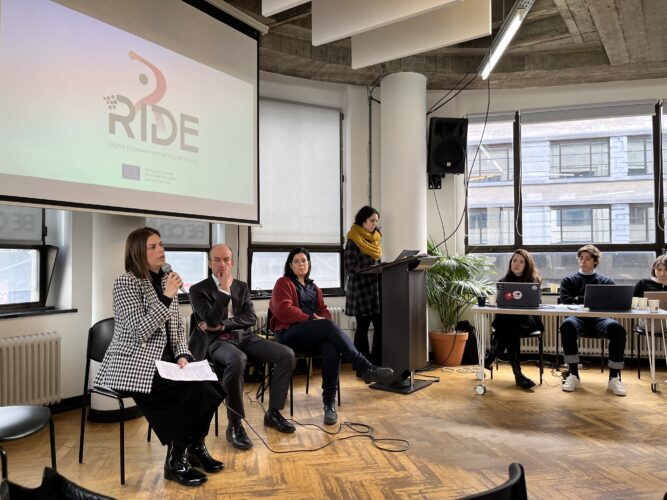
The final event featured a forum discussion with the participation of the project partners: Diesis Network, UNITEE, European Network of Migrant Women, Code to Change, the Bulgarian Chamber of Commerce and Industry, Litus Novum, Symplexis, Legacoopsociali, and Youth Included, supported by the CISCO Networking Academy’s digital training programs for migrant women. During the full-day event, various discussions took place, including a panel discussion on the policies concerning migrant women and digital skills, titled “Exploring the policy landscape: the inclusion of migrant women in Europe’s digital economy”. Panelists included Tim Van Rie from the European Commission’s Directorate-General for Employment, Social Affairs & Inclusion, Ursula Hoenich from the Commission’s Directorate-General for Migration and Home Affairs, and Lina Konstantinopoulou from Eurochambers.

Throughout the day, a recurring theme mentioned by project partners and policy-makers was the need for personalised attention to the needs of this specific target group. A training programme that offers flexibility and empathy in adjusting the course to the needs of participants can lead to lower drop-out rates and a generally better experience for everyone, both participants and organisers. Courses that do not take the specific needs of migrant women into account, such as language barriers, cultural differences, and time restrictions, especially for mothers, might lead to preventing future involvement of migrant women in civil society initiatives altogether. Another interesting, recurring point was related to the RIDE project’s job fairs. According to a survey issued by the European Commission, over 70% of businesses reported the lack of staff with adequate digital skills. 

During the project implementation, companies and trainees participated in national job fairs for migrant women, which also showed the willingness of companies to adjust their offers to the needs of the migrant women. At the same time, partners pointed out that the companies needed guidance in recognising the best ways to accommodate the needs of migrant women, who do not present a homogeneous group and include a wide range of cultural backgrounds.

Moreover, Liane Adler from Litus Novum and Gabriela Dimitrova from the Bulgarian Chamber of Commerce and Industry reported that it had been easy to engage employers and get them to participate in the job fairs. Knowing the needs of both sides allowed Liane and Gabriela to create the best space and opportunity for employers and job seeking migrant women to meet and connect. By reaching out to migrant organisations and individuals through different channels, including social media, they were able to involve not only trainees from the RIDE programme but also migrant women that were new to RIDE. The overall outcome of the training, mentoring and job fairs was positive: several participants received a job or an internship offer, or could develop their network, skills and confidence. Indeed, just taking part in a job fair and sustaining an interview in a foreign language can be considered a great achievement, as Nora Giannakaki (Symplexis) highlighted.

One of the event highlights featured testimonials from RIDE trainees Alawia & Sara Sagaf Mashhor Alkaf from Bulgaria, Yulianti Kurnianingsih from Italy, and Valeriya Strekalovskaya from the Czech Republic. They each explained to the event participants how participating in the RIDE project and upskilling digitally empowered them to pursue new career goals.
Celebrating International Migrants Day with a webinar on Migrant Women & Digital Skills

To mark International Migrants Day, UNITEE and its partners from the RIDE project organised a webinar on Migrant Women and Digital Skills, which took place on Thursday, 15 December.

Over the last two years, the RIDE project has been piloting a wide range of training and mentoring methods to enable migrant women in Europe to find jobs in the digital sector. We believe giving migrant women digital skills is a successful way to include them in the labour market and the social fabric of their host society.  The digital transition is a key goal of the European Union, and Member States are walking the path of digitalisation in all sectors. Nonetheless, large sections of the population have  little to no digital skills which blocks them from benefiting from the opportunities that the digital economy sector offers. Migrant women and refugees suffer further impediments coming from gender discrimination and social exclusion. Thus, the RIDE project has been addressing these issues by delivering training courses along with mentorship and coaching sessions aimed at enabling migrant and refugee women to find a job in the digital sector and be part of the digital labour market.

The webinar was moderated by Vesa Latifi, project manager at Diesis, one of the widest networks supporting the development of social economy and social entrepreneurship, and co-leader with UNITEE of the RIDE project. Three experts working at the local, national and European levels brought their insights and experience on the topic of migrant women labour market integration and gender disparity in the digital sector: Iffat Gill (The Code to change), Liane Adler (Litus Novium) and Frohar Poya (European Network of Migrant Women). These organisations act in different countries and at different levels of the project. From digital skills training to coaching and mentoring, the speakers’ firsthand experience with the implementation of the project and the topic of integration of migrant women made the webinar an insightful moment of learning for all the participants. The speakers addressed the  challenges of integrating migrant women into Europe’s society and workforce and shared the  main takeaways and  recommendations learned through the course of the project.


Frohar Poya
is project officer at the European Network of Migrant women, a women-led platform that advocates for the rights of migrant, refugee and ethnic minority women in Europe. She shared the findings of a study report conducted in the framework of the project about the digital sector opportunities and barriers for migrant and refugee women.

There is still a gap between men and women when it comes to digital skills. In Europe 8 out of 10 ICT jobs go to men (only 17% of ICT specialists in Europe are women).  In some countries, this gap is considerably wider than in others. Among the countries involved in the RIDE project, Italy, Bulgaria, and Czech Republic are the ones who score worse. These gaps need to be acknowledged and addressed to facilitate migrant women’s access to a growing market and thus improving their level of integration in these societies.


Iffat Gill
is the founder and CEO of Amsterdam-based Code to Change, an association aimed at reducing the skills gap and associated gender divide in the tech sector. Code to Change has been successfully running trainings directed to empower women in the digital sector and reduce the existing gap that Frohar addressed while opening the webinar.

Migrant women are a very heterogeneous group, says Iffat, and there are no “one size fits all” solutions. Each programme is thus designed taking into account the specific needs of the group considered. This attention and care put into the design of the training programmes makes them so successful and fruitful.

Designing the training programmes encompasses several phases:

Stakeholder analysis: Making sure they are involved and engaged. From public & private companies to tech companies, stakeholders must be kept on board and also informed about the target group for better chances in future recruitments.

Skills mapping/country analysis:. Looking at the top skills demanded by the digital labour market in different countries is a key step for successful trainings.

Skills assessment:. Identifying the skills in high-demand is not enough for the  successful integration of the trainees in the labour market. These must be in line with the personal skills and interests of future employees.

Selection of digital skills program. Finally, a digital skills programme is selected and implemented, taking into consideration the elements above.


Liane Adler
is the founder and managing director of Litus Novum, a start-up based in Berlin that brings together jobseekers from abroad and employers from Germany through counselling, training and placement. Within RIDE, Liane leads the mentoring and coaching sessions. For integrating migrant women in the labour market upscaling their skills is not enough, a holistic and comprehensive approach is needed. Taking into consideration their motivation, needs and difficulties is a crucial step.

In her experience, the main challenges of the counseling and training sessions have been caused by the social-distancing measures of the pandemic, the consequent deterioration in the social and language progress of the trainees, and the lack of homogeneity within the groups, which pushed them to allocate more time to individual sessions. Indeed the group sessions proved to be effective as the students felt the group as a safe place to express themselves, their needs, and their concerns.

Webinars such as this have an important role in advancing the debate on the role of migrant women in the labour market and the gender gap in the tech sector. Migrant women’s involvement and active participation are  indispensable ingredients for a sustainable, fair and equitable digital economy and society.

Find out more about women’s participation in the digital economy and European initiatives here.

Rewatch the webinar here.

Empowering Youth with Lived Migration Experiences: Interview with Syrine Rekhis from Voicify

Policies that are co-designed together with migrants and refugees are still scarce. However, this issue has been receiving more and more attention in recent years, and there are many organisations and projects working towards more inclusivity in decision-making. Voicify is a recently founded umbrella organisation that aspires to promote inclusive decision-making and goes a step further by focusing on young migrants. Voicify trains and mentors youth advocates with lived migration experiences, empowering them politically and promoting their equal participation in policy-making processes.

Read our interview with Syrine Rekhis, President of Voicify, about the importance of their mission.

Follow our online magazine, The New European, for more.